










Subway Surfers
Subway Surfers is a fast-paced endless runner where you dodge trains, switch lanes, collect coins, and use power-ups to stretch every run. Quick reac…
Played 377 times
Digging is only half of it. Every load has to be hauled back to the surface before it is worth anything, which is what makes depth expensive instead of just long.
Looking for more options after World's Deepest Hole? Visit All Games to browse the full library, or use the contact page if you want to report a bug or ask for support.
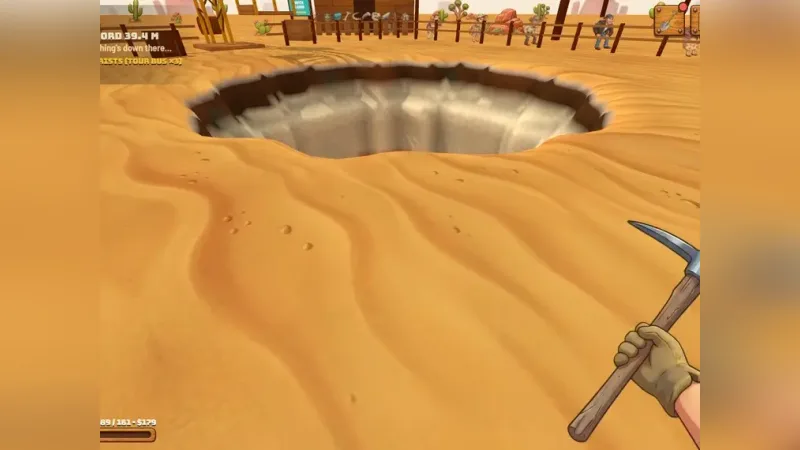
A hole in a desert, a bucket, and a lift cage on a crane. Everything else in World's Deepest Hole is a consequence of going one metre deeper.
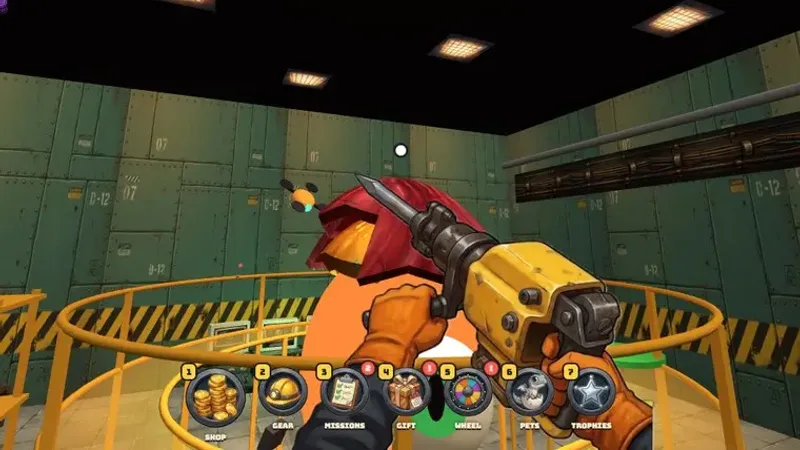
You dig in first person, fill the bucket, and then climb back out to sell the load. That return trip is the design: it is what makes depth expensive rather than merely long, and it is why the crane's lift cage exists at all. A bigger bucket means fewer climbs, and the tools — spade, then pickaxe, jackhammer, drill, eventually a mining laser — decide how much rock each swing is worth.
Spending is the other half of the loop. Every load goes into a better tool, and the depth you can reach resets upward each time, so the game alternates between long productive descents and the short, annoying climb that pays for the next one.
Depth buys weirdness rather than just difficulty. Crystal caverns are ordinary, so is a diamond vault, an old mine, an underground lake and a wall of lava; the oddities are the reason to keep going — a mole with a shop of his own, explosives left underground, a 1957 Cadillac nobody came back for, and the bones of dinosaurs for a museum you assemble.
Tourists are the quiet mechanical joke. They pay to look down your hole, so the thing you dug keeps earning while you dig the next part of it, and the scenery you uncover is what makes the ticket worth buying.
The upgrades are legible from the first minute: you can see the next tool's price and roughly how many loads it costs. There is no hidden currency and no meter that needs managing beyond the bucket, so the game is honest about being an incremental — the pleasure is in watching the number of metres climb and the depth markers get strange.
It runs on a phone as well as a desktop, which suits a game built out of two-minute descents.
Yes. The dirt and ore you dig have to be carried out, which is what the bucket and the crane's lift cage are for - the money only exists once the load reaches the surface.
They change the tool in your hand, in order: spade, pickaxe, jackhammer, drill and finally a mining laser. A better tool means more rock per swing, so the same trip out is worth more.
Crystal caverns and a diamond vault are the ordinary finds, along with an underground lake, a lake of lava and an old mine. The oddities are the draw: a mole with a shop, explosives left underground, a 1957 Cadillac nobody came back for, and collectable dinosaur remains.
Tourists do. They come to look at what you dug, so the hole keeps earning on its own while you are still working on the next stretch of it.
Yes, alongside desktop. It runs in the browser with no download, and the first-person dig-and-haul loop is short enough to suit a touch screen.
If turning a hole into a business appeals, these run on the same instinct.
Subway Surfers is a fast-paced endless runner where you dodge trains, switch lanes, collect coins, and use power-ups to stretch every run. Quick reac…
Temple Run 2 is an endless runner where you escape with a stolen idol, dodge traps, leap across gaps, and collect coins on dangerous temple paths. Fa…
100 Meters Race is a fast sprint game where rhythm, acceleration, and energy management decide who wins the track. Alternate your inputs quickly, hol…
G-Switch 4 is a high-speed gravity runner where one button flips your character between floor and ceiling. Perfect timing, quick reactions, and clean…
Smash Karts is a multiplayer kart battle game where you drive, collect weapon boxes, and fight other players in short arena matches. Fast movement, s…